
How Long Does Fiberglass Resin Take to Dry?
Compare polyester and epoxy cure times, identify normal surface tack, and check when a fiberglass repair is ready to sand, coat, or return to use.
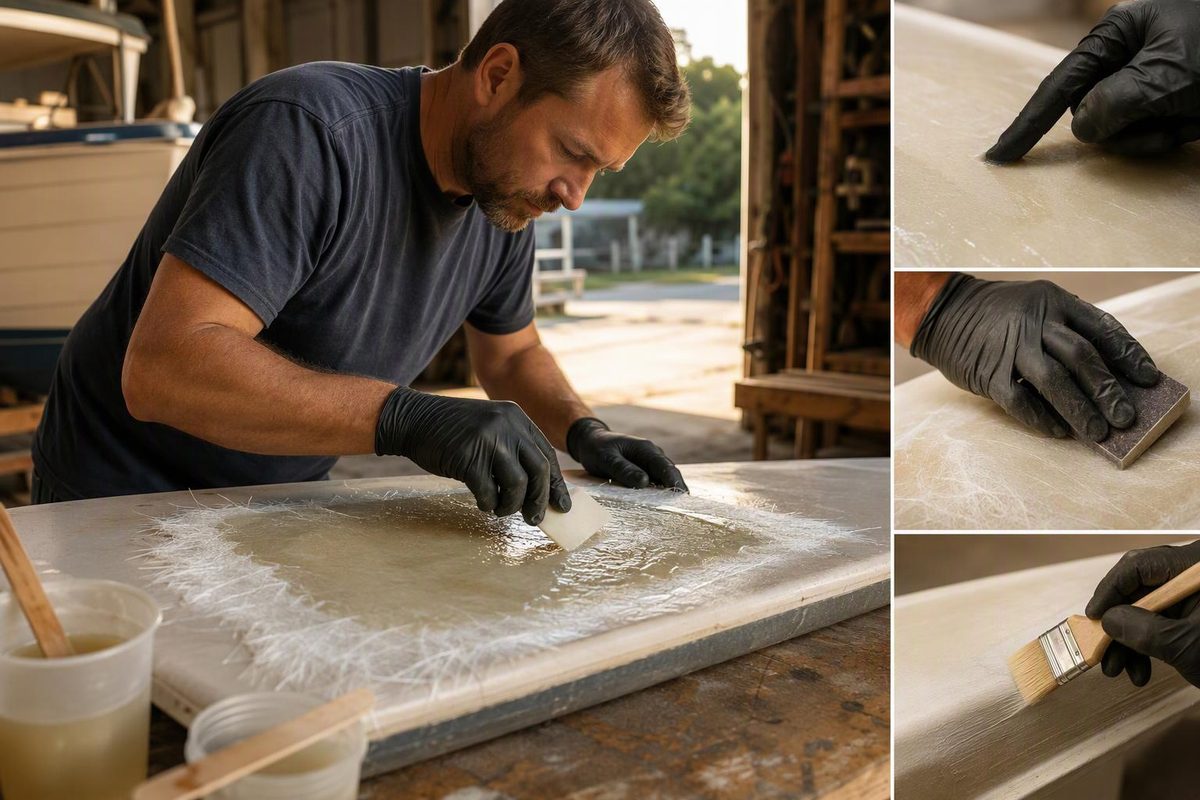
Bondo polyester fiberglass repair resin is sandable in about 2 hours at 75°F; the epoxy examples below reach a solid state in 6–15 hours at 72°F. Neither figure is a universal full-cure or return-to-service time. Unwaxed polyester laminating resin can remain tacky at the surface even when the material beneath has hardened.
The useful question is: ready for another layer, sanding, paint, or use? Those are different milestones. Identify the resin and hardener on your containers before setting a schedule.
Published times for specific resin systems
These are manufacturer figures for the named products—not interchangeable timings for every fiberglass resin.
| Resin system | Conditions | Published timing | What it tells you |
|---|---|---|---|
| Bondo Fiberglass Resin, polyester | 75°F / 24°C | Workable for 8–12 minutes; cures in approximately 2 hours | 3M specifies sanding at approximately 2 hours, with longer curing in cooler temperatures. |
| TotalBoat Polyester Laminating Resin, unwaxed | 70°F / 21°C | Approximate gel times from 10 minutes to 20 minutes or more, depending on the specified catalyst amount | Gel time is not sanding time. The exposed surface remains tacky and needs the specified finishing system. |
| WEST SYSTEM 105 Resin + 205 Fast Hardener | 72°F / 22°C | Thin-film working time: 60–70 minutes; solid state: 6–8 hours | Solid state is a processing milestone, not the end of all strength development. |
| WEST SYSTEM 105 Resin + 206 Slow Hardener | 72°F / 22°C | Thin-film working time: 90–110 minutes; solid state: 10–15 hours | A slower hardener changes the schedule even with the same resin. |
Sources: 3M Bondo instructions, TotalBoat laminating resin instructions, and WEST SYSTEM specifications for 205 Fast Hardener and 206 Slow Hardener.
Decide which cure milestone you need
Fiberglass resin hardens through a chemical cure; simply giving it more air is not a reliable way to finish the job.
- Another layer: Follow the product’s layup or recoat instructions. Partially cured epoxy can chemically bond with another epoxy layer, but that opportunity diminishes as curing progresses.
- Sanding: WEST SYSTEM describes sandable solid epoxy as material that cannot be dented with a thumbnail. Use that as a processing check alongside the product’s timing—not as proof that a structural repair is safe.
- Paint or gelcoat: WEST SYSTEM instructs users to let epoxy cure fully, then wash and sand before applying non-epoxy coatings. A sandable surface is not automatically ready for paint. Also confirm that the intended coating is compatible with the resin system.
- Loading or water exposure: Look for the repair system’s specific return-to-service and immersion requirements. Do not substitute its pot life or sanding time.
WEST SYSTEM notes that its solid epoxy continues curing over the next several days at room temperature. See its cure-stage explanation, coating preparation instructions, and coating compatibility troubleshooting.
Why the repair may take longer
Temperature matters at the repair, not just in the room. A cold panel can keep the applied resin colder than the surrounding air. Warmer epoxy cures faster; cooler conditions slow it. Keep the resin, substrate, and curing environment within the product’s specified temperature range.
A mixing cup is not a timing sample for a thin patch. Epoxy retained in a deep cup traps reaction heat and cures faster than the same quantity spread over fiberglass. WEST SYSTEM’s 105/205 specifications illustrate the difference: at 72°F, a 100-gram cup has a 9–12-minute pot life, versus 60–70 minutes of thin-film working time. Large batches can overheat, so do not use batch size or aggressive heating as a shortcut. These effects are explained in WEST SYSTEM’s epoxy chemistry guidance.
Still sticky? Check before covering it
- Unwaxed polyester: Surface tack may be intentional; it is not the same as a repair that remains soft throughout. TotalBoat specifies a final coat of its wax-containing polyester finishing resin for a hard, tack-free finish. More waiting alone does not resolve the exposed laminating surface. Follow the product’s finishing instructions.
- Hard epoxy with a waxy film: This may be amine blush, not uncured resin. WEST SYSTEM specifies washing with clean water and an abrasive pad before sanding; solvent is not the recommended blush remover. Dry the washed surface before proceeding. See its surface-preparation guidance.
- Epoxy still soft beyond its expected cure: Check temperature, resin–hardener compatibility, ratio, and mixing. Do not add extra hardener or cover non-curing epoxy with another layer. WEST SYSTEM recommends removing epoxy that failed because of incorrect mixing or incompatible components. Its troubleshooting guidance separates those failures from slow curing in the cold. Our resin and hardener mixing guide explains the checks.
For a cosmetic patch, these checks help schedule finishing. For a load-bearing hull, deck, or shower-pan repair, hardness alone cannot establish that the damage, support, and reinforcement have been properly repaired. If the area leaks, flexes, or has uncertain structural integrity, stop before returning it to use and assess the repair scope.