
Epoxy Hardener and Resin: How to Match, Measure and Mix
Match epoxy resin to its approved hardener, calculate the stated ratio correctly, control batch heat, and troubleshoot soft or sticky fiberglass repairs.
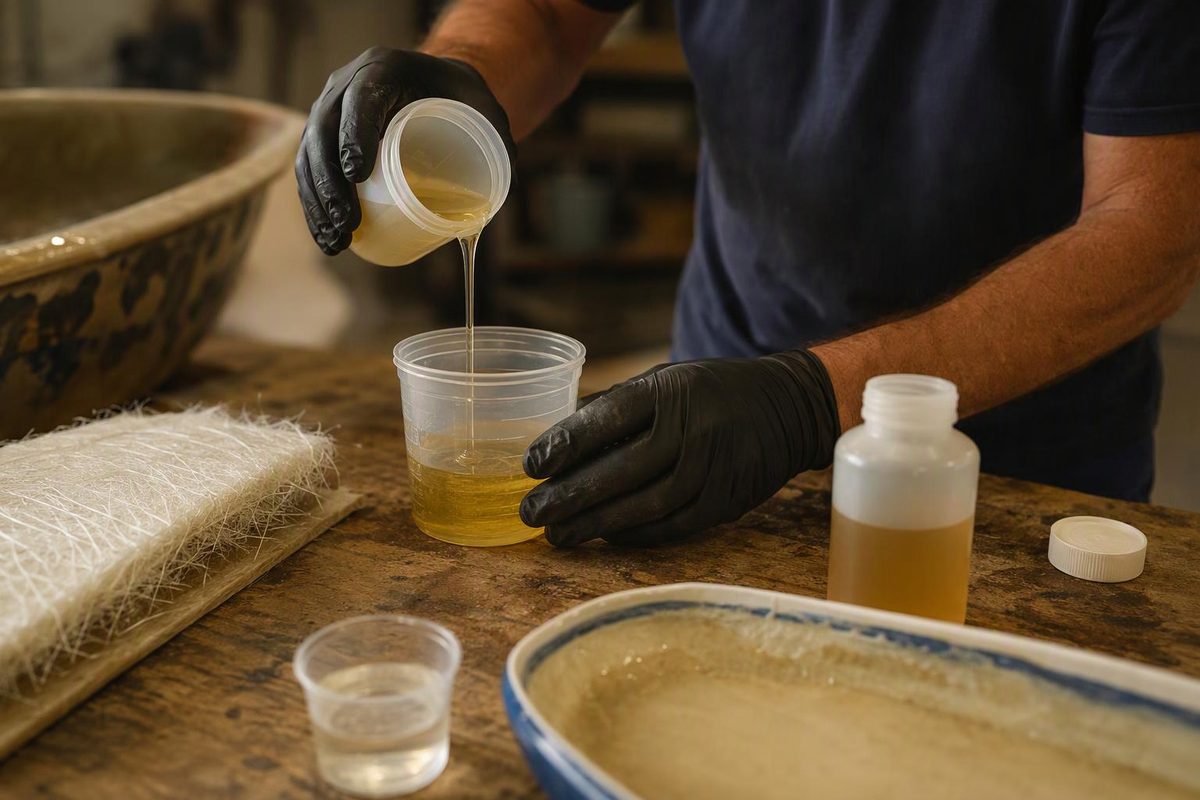
Epoxy resin and hardener must be treated as one formulated system. Buy the resin with its listed compatible hardener, then measure by the ratio and method on that product’s label or technical data sheet. Part A and Part B labels do not establish a universal ratio, and adding extra hardener will not reliably accelerate the cure.
A hardener from another epoxy line may use different chemistry or proportions. Polyester-resin catalyst is not epoxy hardener. WEST SYSTEM specifically warns that its resin will not cure properly with another brand’s epoxy hardener or with polyester catalyst (WEST SYSTEM problem solver).
Select the documented ratio and enter your target batch; the calculator splits it into resin and hardener.
Epoxy Batch Ratio Calculator
Use only the ratio and measuring method specified for the exact resin-and-hardener system.
For a 300 mL mixed batch
Using a 2:1 resin-to-hardener volume ratio
This calculation checks proportions only. It does not establish compatibility, working time or the maximum safe batch size.
Source: System Three General Purpose product data and measuring guidance. The 2:1 volume and 100:44 weight ratios apply to that formulation, not to epoxy generally.
The Compatible Hardener Sets the Working Conditions
Within a compatible product family, hardener choice often determines working time and usable temperature range. Make the selection based on the actual application rather than treating fast, medium and slow hardeners as interchangeable.
- Application temperature: Consider the temperature of the resin, hardener, workpiece and shop—not just the day’s outdoor high.
- Batch and repair size: A slow hardener allows more time to wet out several fiberglass layers or cover a broad area. A fast hardener may suit a small repair in cool conditions.
- Required finish: For visible clear work, check the hardener’s color and whether the system is formulated to resist amine blush.
- Application type: Laminating, bonding, fairing and deep casting can require different formulations. Do not assume a laminating epoxy is suitable for a thick pour.
Temperature ranges and working times are product-specific. For example, System Three lists its General Purpose system at a 2:1 resin-to-hardener ratio by volume and offers fast, medium and slow hardeners for different temperature ranges (System Three product data). That example does not make 2:1 a general rule for epoxy.
Do not add extra hardener to speed a cold cure. Too much or too little can prevent a thorough cure. Bring the materials and work into the manufacturer’s stated temperature range, or select a compatible faster hardener if the instructions permit it.
Volume and Weight Ratios Are Not Interchangeable
Determine whether the ratio is stated by volume or by weight before measuring. Resin and hardener can have different densities, so the numbers for the two methods may differ even when they describe the same formulation.
System Three, for example, specifies its General Purpose formulation as 2:1 by volume but 100:44 by weight. Its mixing guide cautions against using a volume ratio for scale measurements (System Three measuring guide). A 2:1 volume instruction therefore must not be entered on a scale as though it meant two grams to one gram.
Use this sequence for a repeatable batch:
- Confirm the product names, specified ratio, measuring method, minimum application temperature and expected working time on the current label or data sheet.
- For volume measurement, use clean, unwaxed, straight-sided graduated cups. For weight measurement, use a scale with enough resolution for the batch size.
- If using matched pumps, prime them and dispense complete strokes. Equal numbers of resin and hardener strokes do not necessarily mean equal volumes because a matched pump set may meter the required unequal ratio automatically.
- Avoid tiny batches unless the equipment can dose both components accurately.
If the containers are old or their storage history is uncertain, run a small controlled cure test before committing to the repair. The opened-resin shelf-life guide explains what to inspect in each component.
Mix the Two Parts Before Adding Fillers
Scrape the cup’s sides and bottom while stirring until the batch is uniform. For critical coating or laminating work, transfer the mixed epoxy to a second clean cup and mix again. This reduces the chance of applying unmixed resin or hardener clinging to the first cup’s sides or bottom.
Add silica, fairing filler or another approved additive only after the resin and hardener are thoroughly combined. Adding filler first makes it harder to see and incorporate streaks of unmixed material.
Move the mixture promptly into a roller tray or apply it to the work. Epoxy cures through an exothermic reaction, so a deep mass retained in a cup heats and cures faster than the same quantity spread in a thin layer.
System Three warns that an oversized batch can enter a runaway reaction, exceed 250°F and produce noxious fumes. Its recommended maximum batch sizes vary substantially by formulation and hardener speed (System Three batch-size guidance). The ratio calculator does not determine a safe maximum batch size. Follow the limit for the actual product and mix only what can be applied promptly.
For fiberglass work, confirm that the reinforcement will wet out with epoxy. Some conventional chopped-strand mat uses a binder intended to dissolve in polyester resin’s styrene; see fiberglass and epoxy compatibility. Properly wetted reinforcement should not retain dry white fibers, resin-starved areas or pools of excess resin.
Cure Patterns Point to Different Mixing Problems
Temperature can delay a correctly proportioned cure, but more time will not correct a badly off-ratio or poorly mixed batch. Compare the elapsed time and recorded work temperature with the product’s cure schedule.
Material left in the mixing cup can provide a clue, but it is not a perfect cure sample. The concentrated mass may cure faster than epoxy spread over a laminate because it retains more reaction heat.
Uniformly Soft Epoxy May Be Too Cold
If the entire repair is soft but gradually becoming firmer, the work may be colder than expected. Maintain safe, moderate warmth within the manufacturer’s instructions and allow the specified additional time. Do not use uncontrolled heat that could damage the laminate or drive a large batch into excessive exotherm.
Sticky Streaks Usually Indicate Incomplete Mixing
Firm areas beside sticky streaks often point to incomplete mixing or unmixed material transferred from the cup. Scraping the container is necessary while mixing, but scraping residual material directly onto the repair after mixing can deposit poorly combined resin or hardener.
Liquid or Rubbery Epoxy Suggests a Ratio or Compatibility Error
If the material remains liquid or rubbery after the specified time at the specified temperature, suspect the wrong ratio, incompatible components or a serious measuring error. Verify both container labels and determine whether the ratio was supposed to be measured by volume or weight.
Do not laminate or coat over material that is not curing. WEST SYSTEM directs users to remove uncured epoxy, correct the cause and start again rather than burying it under another coat (WEST SYSTEM problem solver).
A firm cured surface with a waxy film may have water-soluble amine blush rather than a failed cure. Wash it as the system manufacturer directs before sanding or recoating.
A sound cure does not make an undersized patch structural. Cracks that move, wet or crushed core, broad delamination, and damage in a load-bearing hull area require diagnosis before resin is mixed. The fiberglass patch guide covers tapering, reinforcement and stop points. If hull integrity is uncertain, keep the boat out of service and obtain a qualified repair assessment.
Resin and Hardener Require Separate Safety Checks
Read the resin and hardener safety data sheets separately because their hazards can differ. Avoid skin and eye contact, wear gloves and eye protection suitable for the specific product, provide ventilation, and use any additional controls or protective equipment required by the SDS.
NIOSH identifies epoxy resins, modifiers and hardeners as potential causes of irritant and allergic skin reactions (NIOSH occupational dermatoses guidance). Contamination that seems minor can still matter, particularly with repeated exposure.
Do not clean epoxy from skin with solvent. WEST SYSTEM recommends a waterless skin cleanser for resin or mixed epoxy and soap with warm water for hardener. It also calls for ventilation in confined spaces and suitable respiratory protection when ventilation or dust control is inadequate (WEST SYSTEM safety guidance). Follow the specific product SDS for spills, disposal and first aid.