
Gelcoat Repair: Diagnose, Fill, Cure and Finish
Learn when gelcoat repair is cosmetic, when fiberglass needs rebuilding, and how to prepare, fill, cure, sand and polish a stable chip or gouge.
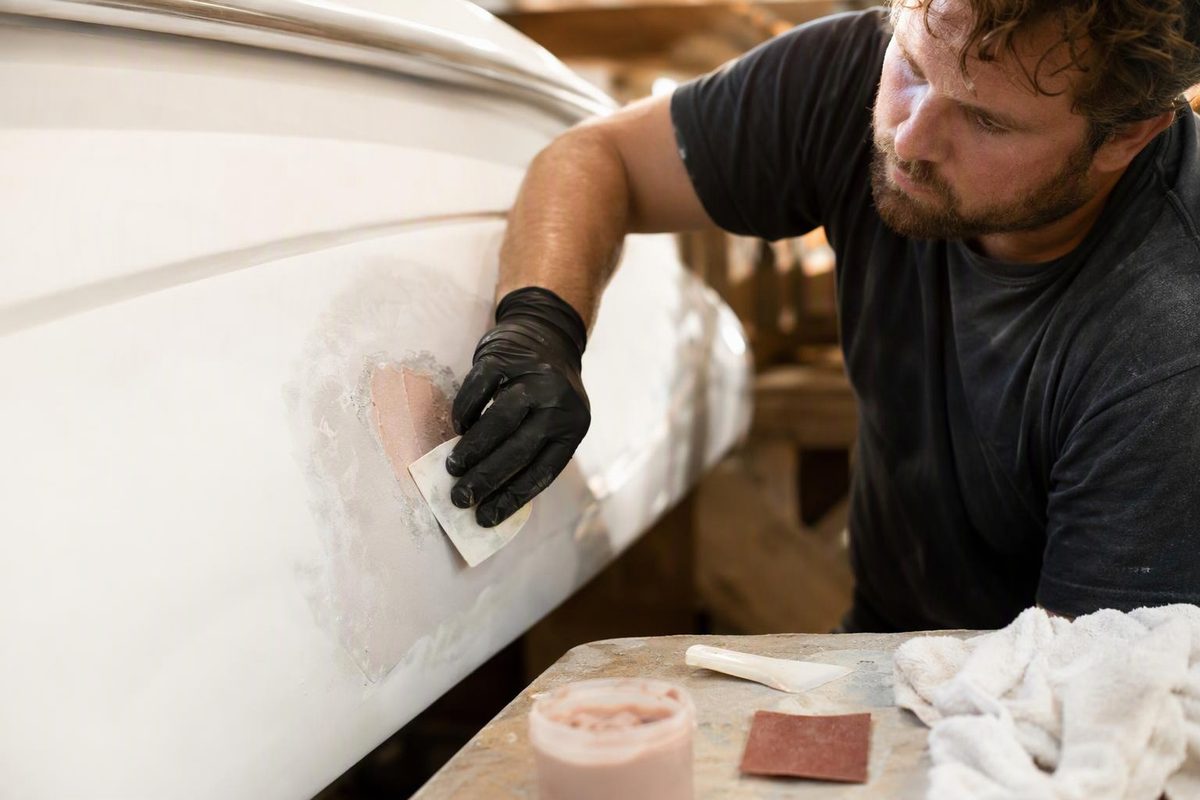
Use a finish-only gelcoat repair only when a scratch, chip or gouge stops in the gelcoat and the material beneath it remains sound. Gelcoat paste cannot rebuild broken fiberglass, restore a wet core or correct the movement that caused a crack.
On a typical production fiberglass boat, gelcoat is the pigmented outer layer over the reinforced laminate. It supplies the smooth finish and acts as a moisture barrier; the laminate carries the structural loads. WEST SYSTEM’s boat-repair manual describes production gelcoat as commonly 12–22 mils thick, so a small-looking mark may already reach the fiberglass (WEST SYSTEM fiberglass repair manual).
Select what inspection and preparation revealed to see whether a finish-only repair is reasonable.
Finish-Only Repair Check
Base the answers on cleaned, opened and inspected damage—not only the visible surface.
Choose all three fields. An unanswered or uncertain condition is not evidence that the damage is cosmetic.
Default result: inspection incomplete until all three conditions have been checked.
Decision basis: WEST SYSTEM Fiberglass Boat Repair & Maintenance and Spectrum Color stress-crack repair instructions. This check does not establish hull integrity.
Decide Whether the Damage Is Cosmetic
Wash the area and inspect it under bright light. A cosmetic patch is reasonable when the surrounding surface is firm, the defect has stable edges and preparation exposes sound material without broken reinforcement.
Stop before applying gelcoat if you find:
- white, frayed, crushed or detached glass fibers;
- a crack that opens or an area that moves more than the surrounding panel;
- a soft area, suspected wet core or widespread hollow response;
- impact, grounding or concentrated hardware-load damage;
- cracks recurring around a joint, corner, fastener or flexing panel;
- leakage or uncertain hull integrity below the waterline;
- numerous blisters or liquid behind the gelcoat.
WEST SYSTEM notes that flex cracking can require reinforcement and that hydrolysis behind gelcoat blisters can damage the resin matrix and resin-to-fiber bonds. Its repair decision changes once a crack passes through the gelcoat into the first reinforcement layers (fiberglass repair manual). Spectrum Color’s stress-crack procedure likewise removes damaged gelcoat and fiberglass, rebuilds the area with glass and resin, and only then prepares it for a finish coat (Spectrum Color stress-crack instructions).
For a line that may reflect movement rather than a one-time scratch, use the checks in Cracking Gel Coat: Causes, Warning Signs & Repair Options.
Choose a Complete, Compatible Repair System
A pre-thickened, color-matched gelcoat paste is usually the simplest option for a small cosmetic defect. Brushable or sprayable gelcoat can cover a larger area, but it adds variables such as reducer or patch aid, catalyst ratio, film thickness and surface-cure treatment.
Check the current instructions for the exact product:
- Approved substrate. Compatibility cannot be inferred from the word “gelcoat.” Evercoat says One Step Finish Gel-Kote must not be applied over an epoxy repair system. WEST SYSTEM says polyester gelcoat can be applied over its properly prepared epoxy in some repairs. These are product-specific positions, not universal rules (Evercoat One Step Gel-Kote data sheet; WEST SYSTEM finish-coating guidance). Use a finish approved over the cured repair material and test the complete system when compatibility is uncertain.
- Catalyst ratio. Many polyester gelcoat systems use MEKP, but ratios and “drops per ounce” are not interchangeable among products. Measure according to the instructions supplied with the material in hand.
- Surface cure. Conventional gelcoat may need a surfacing agent or a PVA barrier to cure fully where it contacts air. Other repair products contain the necessary additive and cure hard without a separate barrier. Spectrum’s spray-gelcoat instructions require a surfacing agent or PVA, whereas Evercoat says its cited Gel-Kote does not require mold release for a hard cure (Spectrum Color gelcoat instructions; Evercoat data sheet).
- Temperature and working time. Evercoat specifies at least 60°F for its product, gives an approximate 15-minute gel time at 75–80°F and says to mix only what can be applied within 10 minutes. Those figures illustrate why the product sheet matters; they are not general specifications for all gelcoats.
A factory color code is a useful starting point, but an aged, polished or sun-exposed surface may no longer match its original shade. Verify a fully cured sample in representative light before committing to the visible repair.
Repair a Stable Chip or Gouge
1. Wash, Dewax and Dry
Remove water-soluble dirt first. Then use the cleaner specified by the repair-product manufacturer to remove wax, polish, grease and silicone. Cleaning before sanding helps avoid driving contamination into the surface. Allow the repair area and any exposed laminate to dry.
Acetone is not a universal instruction. Spectrum specifies it for its patch paste, while the selected system may require another cleaner or place limits on solvent use.
2. Remove Failed Material
Mask beyond the work area. Grind or route away cracked, loose and undercut gelcoat until the remaining edge is firmly bonded. Open a narrow crack enough to expose its full depth; spreading paste across the visible line leaves failed material underneath.
Dish or bevel the edge rather than creating a deep, vertical-sided slot. Avoid cutting sound glass during a finish-only repair. If preparation reveals broken reinforcement, stop and change to a laminate-repair plan. See 2-Part Epoxy Filler: Choose, Mix and Apply It Correctly for the distinction between fairing, adhesive filling and reinforcement.
3. Sand to the Product Specification
Preparation grit varies. Evercoat calls for a final 120–220-grit featheredge for One Step Gel-Kote; Spectrum specifies 220 grit for its patch paste. Follow the selected product rather than a generic grit schedule.
Remove dust without touching the prepared surface with bare fingers. Use a primer or tie coat only when the repair system specifies one.
4. Mix a Small Batch Accurately
Bring the material and substrate into the specified temperature range. Stir or tint the base as directed before adding catalyst. Measure the components and mix for the stated time, scraping the sides and bottom of the cup without deliberately whipping in air.
Read the label and safety data sheets for the gelcoat, catalyst, cleaners and additives before starting. Use the specified eye and skin protection and effective ventilation. Polyester gelcoats may release styrene during application and cure; a NIOSH boat-manufacturing survey identifies styrene vapor from resins and gelcoats as an inhalation hazard, although the measured industrial processes and exposure levels should not be treated as estimates for a small repair (NIOSH styrene survey). Grinding also creates dust, so collect it at the tool where practical and protect adjacent spaces.
5. Fill and Allow a Full Cure
Press paste into the bottom of the defect rather than bridging over an air pocket. Leave it slightly proud for finish sanding, but avoid smearing it far onto sound gelcoat. Apply the specified PVA, film or surfacing treatment if the final coat requires exclusion of air.
Do not sand by elapsed time alone. Wait for the manufacturer’s stated sanding cure and confirm that the patch is hard through its section. A gummy surface can indicate low temperature, inaccurate catalyst measurement, incomplete mixing or a missing surface-cure treatment.
6. Block-Sand, Compound and Inspect
Mark around the repair so its boundary remains visible. Keep a small sanding block flat and remove only the excess. Spectrum’s patch-paste procedure uses 220, 400 and 600 grit before buffing; Evercoat starts its hardened Gel-Kote at 400 grit and then moves to 600 or finer. The schedules differ because the products and applied surfaces differ (Spectrum patch-paste instructions; Evercoat data sheet). Start with the finest grit that will level the patch, then follow the manufacturer’s progression.
Compound only until the sanding haze disappears, then polish and protect the surface as the instructions allow. Excessive buffing can heat, discolor or cut through the new finish.
Inspect the area again after normal service. A returning line, a visible patch edge or continuing panel movement points to an unresolved cause beneath the gelcoat, not a polishing problem.