
2-Part Epoxy Filler: Choose, Mix and Apply It Correctly
Learn when to use fairing putty, structural adhesive filler or fiberglass reinforcement—and how to prep, mix, cure and finish the repair.
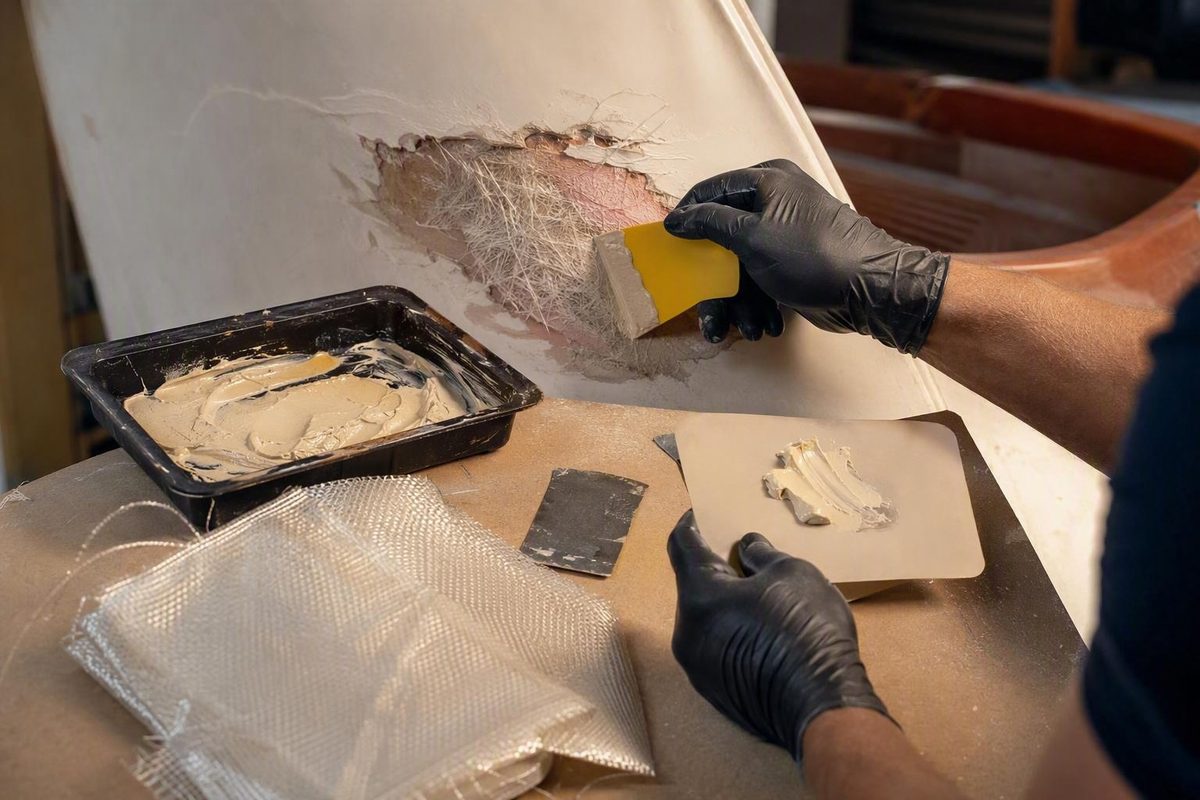
“2-part epoxy filler” can describe either a ready-made resin-and-hardener paste or liquid epoxy thickened with a separate filler powder. More important, products sold under that broad name do different jobs. A sandable fairing putty can level a shallow depression; an adhesive filler can bridge a gap in a bonded joint. Neither automatically replaces damaged fiberglass reinforcement.
First decide whether the defect is cosmetic
Use a fairing filler for a stable low spot, gouge or surface profile that needs to be shaped and sanded. Use an adhesive or high-density filler for a manufacturer-approved bond, fillet, hardware area or structural gap where strength matters more than easy sanding. WEST SYSTEM’s selection guide distinguishes hard, structural adhesive mixtures from light, easily sanded fairing mixtures (WEST SYSTEM).
Stop treating the job as a simple fill if you find cut or exposed fibers, a soft or wet core, delamination, a through-hole, movement, impact damage, or cracking that returns under load. In a fiberglass laminate, the fibers carry most structural loads, and restoring fiber continuity is an objective of structural repair (WEST SYSTEM fiberglass repair manual). That normally means removing unsound material and rebuilding with compatible resin and reinforcement—not packing the cavity with putty. See the broader fiberglass patch sequence before proceeding.
A ready-made fairing compound may explicitly prohibit structural use. TotalBoat, for example, says TotalFair is not a structural repair substitute or bonding adhesive (TotalFair technical data). Treat that as a product-specific rule and read the corresponding instructions for any other filler.
Check five specifications before buying
- Substrate: Confirm approval for cured fiberglass or gelcoat and for any wood, metal or existing epoxy involved.
- Exposure: Check above- versus below-waterline use, immersion limits and service temperature.
- Maximum depth per application: Deep cavities may require layers or a different repair design. Do not assume every epoxy paste can be cast thickly.
- Finish system: Epoxy filler usually needs a protective coating. Confirm the required primer and whether the intended paint or gelcoat may be applied over it. TotalFair, for example, is not UV-stable and does not permit gelcoat directly over the filler (TotalFair technical data).
- Mix and cure data: Ratio by volume may differ from ratio by weight. Temperature, batch mass and layer thickness can all alter working and cure time.
If the repair is on cured polyester fiberglass, the resin choice deserves separate attention; compare polyester resin and epoxy resin for secondary repairs.
Apply it without creating a weak boundary
1. Remove the cause and unsound material
A filler cannot stabilize a flexing panel, dry a wet core or rebond hidden delamination. Diagnose and correct those conditions first. Grind or sand back to sound material without cutting healthy reinforcement unnecessarily.
2. Clean and abrade as the product requires
Remove wax, grease, oil, moisture, dust and any amine blush. Abrade to the grit specified in the technical data, then remove residue using the stated method. Do not substitute a favorite solvent casually: substrate and coating instructions differ. As one concrete example, TotalFair calls for dewaxing fiberglass or gelcoat, abrasion with 80-grit or coarser paper, residue removal and complete drying before application (TotalFair technical data).
3. Meter before thickening
For a packaged paste, measure Parts A and B exactly as directed and mix until color and texture are uniform. Do not assume “two part” means 1:1.
When making filler from liquid epoxy and powder, first meter and thoroughly mix the resin and hardener; only then blend in the selected filler in small additions (WEST SYSTEM mixing guidance). Use enough powder to reach the manufacturer’s target consistency without changing the resin-to-hardener ratio.
Mix a small batch and spread it promptly. A large mass can heat rapidly during its exothermic cure; TotalBoat warns that a large mixed mass of its fairing compound can reach 200°F or more (TotalFair technical data).
4. Fill from the bottom and respect depth limits
Press the mixture firmly into the prepared cavity so it wets the surface rather than bridging over trapped air. Leave only enough excess for fairing. For a deep repair, follow the specified maximum lift and recoat window; if that window passes, wash or abrade as directed before adding another layer.
5. Let the product—not the clock—set the sanding time
Confirm that the filler is hard and sands to dry powder rather than smearing or clogging paper. Fair it with a block that follows the intended contour. Wash off blush if the system can produce it, remove dust, and apply the specified primer or coating within its recoat rules.
Uncured epoxy presents a greater skin-exposure potential than respiratory exposure in typical nonspray handling, according to OSHA’s composites guidance (OSHA). Read both component safety data sheets, prevent skin and eye contact, ventilate as directed, and control dust during grinding and sanding.
The practical rule is simple: use fairing putty to restore shape, adhesive filler to make an approved bond, and fiberglass reinforcement to restore a damaged laminate. The label “2-part epoxy filler” alone does not tell you which of those jobs the product can safely do.