
Was the Methylene Chloride Bathtub Refinishing Ban Reversed?
A Fifth Circuit ruling vacated EPA’s 2024 methylene chloride rule, not the 2019 consumer paint-stripper restriction or OSHA protections.
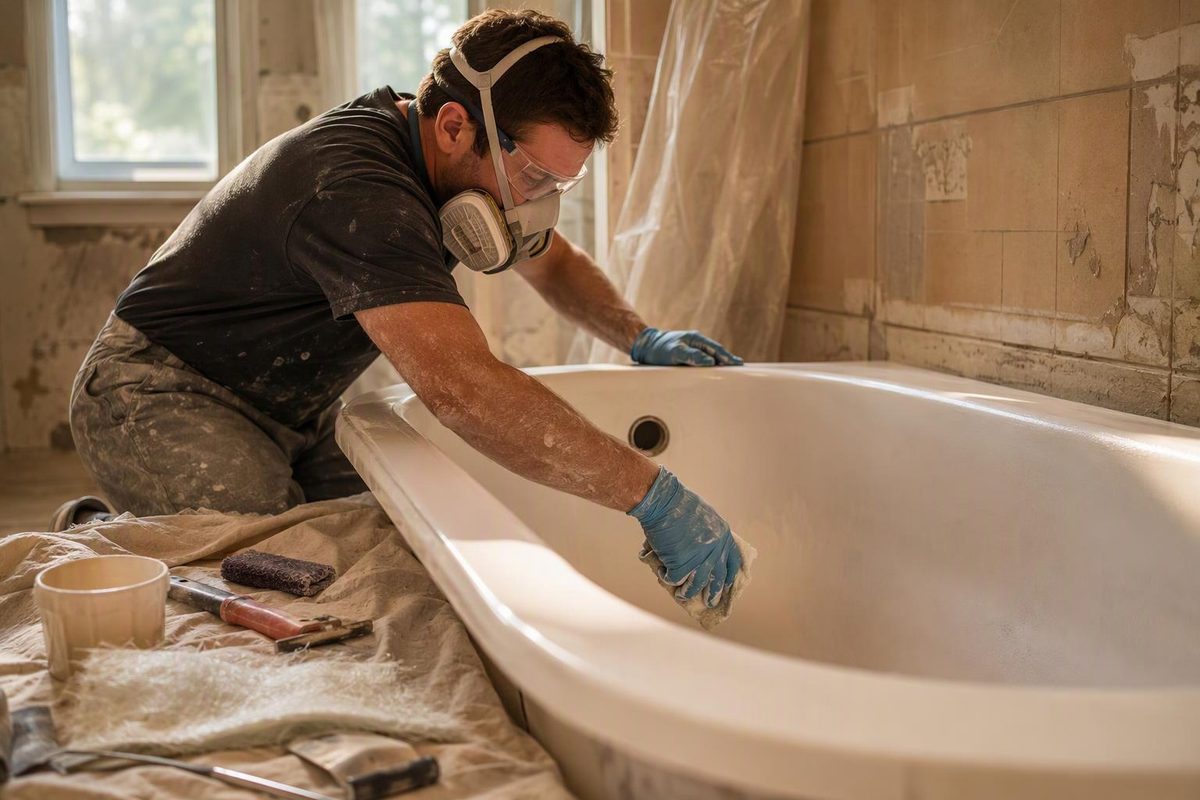
The Fifth Circuit vacated EPA’s 2024 rule, including its prohibition on ordinary commercial paint and coating removal. It did not disturb the separate 2019 restriction on consumer paint strippers, and the ruling does not make methylene chloride safe for DIY tub stripping.
On September 15, 2026, a three-judge Fifth Circuit panel ordered EPA’s 2024 methylene chloride risk-management rule and its underlying 2022 risk determination vacated. The court remanded the matter to EPA (Fifth Circuit opinion).
The 2024 rule had prohibited 40 of 53 evaluated conditions of use. Its broad commercial-use prohibition covered ordinary paint and coating removal, including bathtub stripping. But the separate 2019 restriction on methylene chloride in consumer paint and coating removers was not challenged in this case. Consumers still cannot lawfully be supplied the chemical for that purpose.
What changed—and what did not
| Question | Position as of September 27, 2026 |
|---|---|
| Did the court vacate EPA’s 2024 prohibition on ordinary commercial bathtub stripping? | Yes. The panel ordered the entire 2024 rule and associated risk determination vacated. Commercial users should still verify the mandate and any further review before changing compliance practices. |
| Can a retailer now sell methylene chloride paint stripper to a homeowner? | No. The separate 2019 consumer paint-and-coating-removal restriction remains. |
| Did OSHA’s workplace methylene chloride standard disappear? | No. OSHA’s exposure, monitoring, engineering-control, respiratory-protection and training requirements remain independently applicable to covered employers. |
| Does the decision establish that methylene chloride is safe in a bathroom? | No. The decision addresses EPA’s legal authority, analysis and choice of controls—not whether concentrated vapor can kill. |
EPA’s 2019 rule prohibits manufacturing, processing or distributing methylene chloride for consumer paint and coating removal. It also prevents retailers—including online sellers with consumer customers—from distributing methylene chloride products for paint and coating removal. Business-to-business distribution by suppliers with no consumer customers falls outside that older retailer restriction (EPA’s 2019 rule summary).
The 2024 rule went further, prohibiting most consumer uses and most commercial and industrial uses while retaining a limited group of tightly controlled applications. The Fifth Circuit found errors in EPA’s “whole chemical” approach, treatment of personal protective equipment, scientific analysis and justification for near-prohibition (Fifth Circuit opinion).
This is a recent panel decision. Businesses should check whether the court’s mandate has issued and whether rehearing or Supreme Court review has been sought before changing a compliance program. State rules, contracts and existing safety programs may impose requirements independent of the vacated EPA rule (Sidley’s procedural analysis).
The bathtub hazard has not changed
A bathtub puts the worker over a large evaporating surface inside a small room. OSHA documented a fatal case in which a worker poured stripper containing 85–90% methylene chloride into a tub. A partially open window was the only ventilation; the worker was found unconscious about two hours later. OSHA reported that 17 workers died from 2000 through 2015 while using methylene chloride stripping products to refinish bathtubs (OSHA Fatal Facts).
OSHA specifically says bathroom fans and open windows do not provide adequate ventilation for this work. Its guidance says a full-face, atmosphere-supplying respirator—not a standard cartridge respirator—is required when respiratory protection is needed, alongside exposure monitoring, engineering controls, protective equipment and training.
The OSHA standard sets an eight-hour permissible exposure limit of 25 ppm and a 15-minute limit of 125 ppm. It requires covered employers to determine employee exposure and apply the relevant controls (29 CFR 1910.1052). Vacating EPA’s newer rule did not vacate this OSHA standard.
What to do before repairing or refinishing a tub
For a homeowner, the ruling is not a reason to seek old stock or a commercial-only supplier. EPA advises consumers not to use methylene chloride products already on hand for paint removal and to ask state or local solid-waste authorities for disposal instructions (EPA’s methylene chloride page).
Before choosing another stripping or refinishing system:
- Identify the tub substrate. Fiberglass, acrylic, porcelain-enameled steel and cast iron do not accept every stripper, filler or coating in the same way. If the material is uncertain, start with Fiberglass vs. Acrylic Tubs.
- Read the label and safety data sheet. Check Section 3 for methylene chloride, dichloromethane, DCM or CAS number 75-09-2. “Professional,” “aircraft” or “industrial” wording does not make a product suitable for a bathroom.
- Separate refinishing from structural repair. A sound but worn finish may need a coating system. A moving crack, soft tub floor, exposed fibers or damaged backing needs diagnosis—and possibly reinforcement—before cosmetic refinishing.
- Match preparation to the new coating. Use only a chemical or mechanical preparation method allowed for both the tub substrate and the refinishing system. A substitute stripper can still attack acrylic, soften an existing repair or leave residue that prevents adhesion.
- For commercial work, verify current requirements before mobilizing. Account for federal OSHA or an OSHA-approved state plan, state chemical restrictions, worker training, exposure monitoring and the procedural status of the Fifth Circuit case.
The accurate shorthand is: the Fifth Circuit panel vacated the 2024 commercial-use ban, but it did not reverse the 2019 consumer paint-stripper restriction or remove the lethal exposure risk associated with bathtub refinishing.