
HVLP Spray Gun for Gelcoat: Nozzle, Air and Setup
Choose a gelcoat-compatible HVLP gun, match nozzle size and compressor airflow, and test the spray pattern without over-thinning the coating.
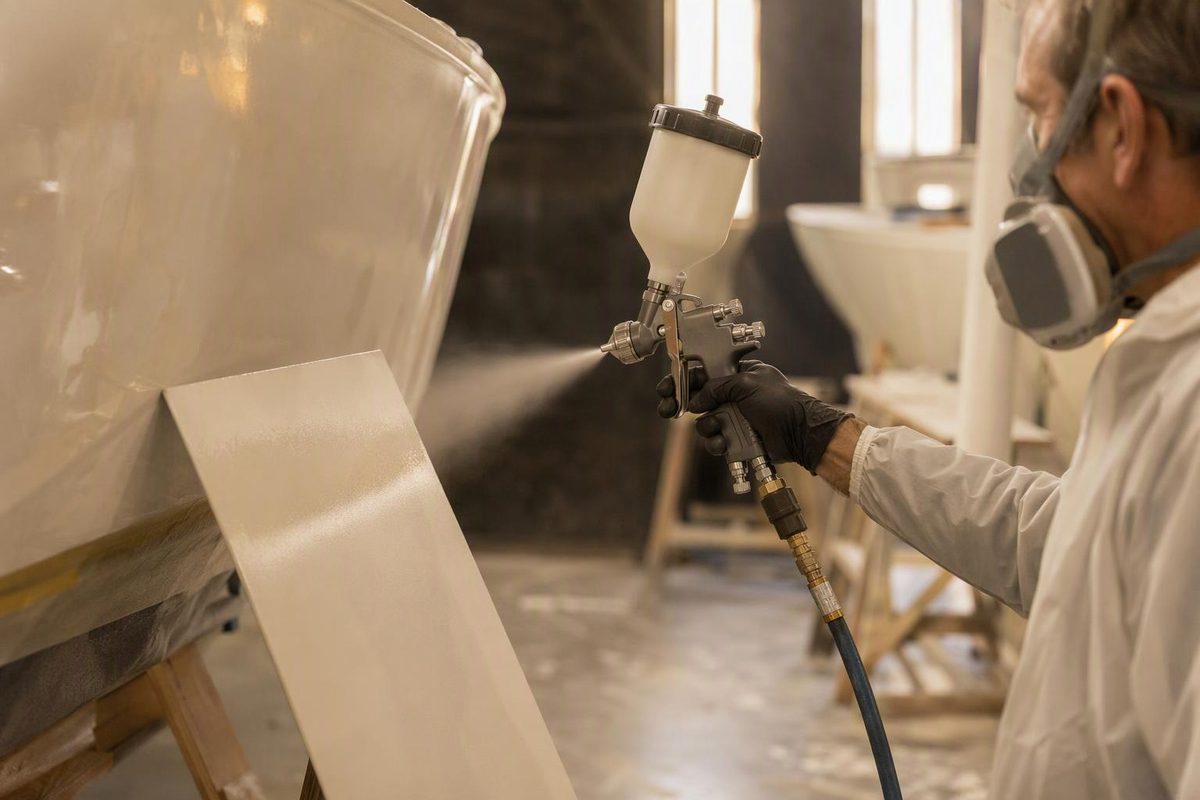
Yes, an HVLP spray gun can spray gelcoat—but choose a gun designed for it, not simply one labeled HVLP. For larger repair areas, a full-size, gelcoat-rated gun with a 2.5 mm nozzle is a useful candidate to compare against your coating’s instructions. It is not a universal specification: TotalBoat recommends 2.2–3.0 mm for its gelcoat, while equipment manufacturers offer other sizes for different jobs. TotalBoat’s technical data supports that range.
Match the nozzle to the coating and repair size
Gelcoat is thicker than paint. A small paint nozzle is not automatically suitable, and excessive thinning is not a sound way to make an unsuitable gun work. Check both the gelcoat instructions and the gun manufacturer’s supported nozzle sizes. Jamestown Distributors’ nozzle guidance specifically notes that formulations and guns vary.
These manufacturer examples show the distinction:
| Equipment example | Supplied nozzle and cup | Intended work |
|---|---|---|
| ES G830 HVLP touch-up gun | 2.0 mm; 0.12 litre | Localized surface touch-ups and intricate repairs |
| ES G860 HVLP gun | 2.5 mm; 0.6 litre | Larger surface repairs, refinishing and mold work |
| ES G660 conventional production gun—not HVLP | 4.0 mm; 1 litre | Higher-output gelcoat application |
These are equipment specifications, not interchangeable gelcoat recipes. They come from ES Manufacturing’s gun catalog. A manufacturer’s 2.0 mm touch-up gun does not override a particular coating’s larger-nozzle recommendation.
Also check solvent-resistant seals, separate fluid and fan adjustments, replacement nozzle kits, and cleaning access. ES specifies acetone-resistant construction for its G830 and G860. Cup capacity alone should not decide the purchase: you need to apply and clean out each catalyzed batch before it gels.
Match the compressor by airflow—not tank size
Look for air consumption in CFM and the specified operating pressure. Compare those with the compressor’s delivered airflow at the relevant pressure, allowing for its duty cycle. Tank capacity or advertised horsepower alone does not establish that it can sustain spraying.
For example, Fibre Glast lists its 2.5 mm, 0.6-litre touch-up gun at 4.7–7.1 CFM and 40–80 psi. Those figures belong to that gun; they are not settings for every HVLP model. Fibre Glast’s specifications provide the comparison point.
HVLP’s low pressure at the air cap is not the same as its required inlet pressure. Use the manual’s pressure-measurement procedure rather than treating the compressor tank gauge as gun pressure. Hose length, hose diameter, fittings, filters and regulators can all reduce pressure while air is flowing, as DeVilbiss’s air-supply guide explains.
Supply clean, dry air: Ashland recommends removing oil and water contamination and draining water traps because contamination can produce finish defects. Ashland’s application guide explains why filtration matters.
Test the gun before spraying the repair
Do not start without suitable ventilation and the PPE required by the gelcoat, catalyst and solvent safety data sheets. That includes appropriate respiratory, eye, skin and clothing protection. HVLP does not make spraying gelcoat harmless. Ashland’s safety guidance identifies those protections. Keep flames and other ignition sources out of the work area; TotalBoat’s technical sheet lists an 88°F flash point for its gelcoat.
- Prepare the equipment and cleanup supplies first. Confirm the correct nozzle is fitted and the fluid passages are clean. Have a masked test panel ready, preferably in the same orientation as the repair.
- Bring the material and panel within the coating’s application-temperature range. Cold gelcoat has higher viscosity and can produce an underdeveloped spray pattern; do not compensate automatically with more reducer. Ashland describes this temperature effect.
- Use only the approved reducer or additive, in its permitted proportion. For TotalBoat Gelcoat, styrene is an approved thinner; acetone is a cleanup solvent, not the recommended thinner. Its technical sheet permits up to 15% styrene, only as needed—not as a target or a rule for other brands. See TotalBoat’s spray instructions.
- Catalyze a small test batch using the coating’s specified catalyst and ratio. Do not reduce catalyst below the approved range to buy setup time. TotalBoat recommends catalyzing only what can be applied within 10–15 minutes, and notes that larger batches have shorter working times at the same catalyst percentage. Leave time for cleanup before gelation. Product application data.
- Adjust on the test panel, not the boat. Start within the gun’s specified pressure range, then adjust fan width and fluid delivery one variable at a time. Seek an even pattern without heavy spits or excessive mist. Maintain consistent distance, overlap and travel speed, and verify film build with a wet-film gauge rather than judging by gloss alone. Fibre Glast’s application guide emphasizes those controls.
If the pattern remains poor, stop and check nozzle suitability, cleanliness, material temperature and sustained air supply before adding more thinner. If the batch starts to gel, stop spraying and follow the equipment’s cleanup procedure; do not try to restore it with solvent.
Once the equipment passes the test, use the coating-specific preparation, film-build and surface-cure sequence in how to apply gelcoat. A spray gun solves delivery—not substrate compatibility, structural damage or cure.