
6 Checks for Buying Fiberglass Rolls
Building-insulation rolls are not laminating reinforcement. Check construction and resin compatibility, calculate area, and verify the price unit before ordering.
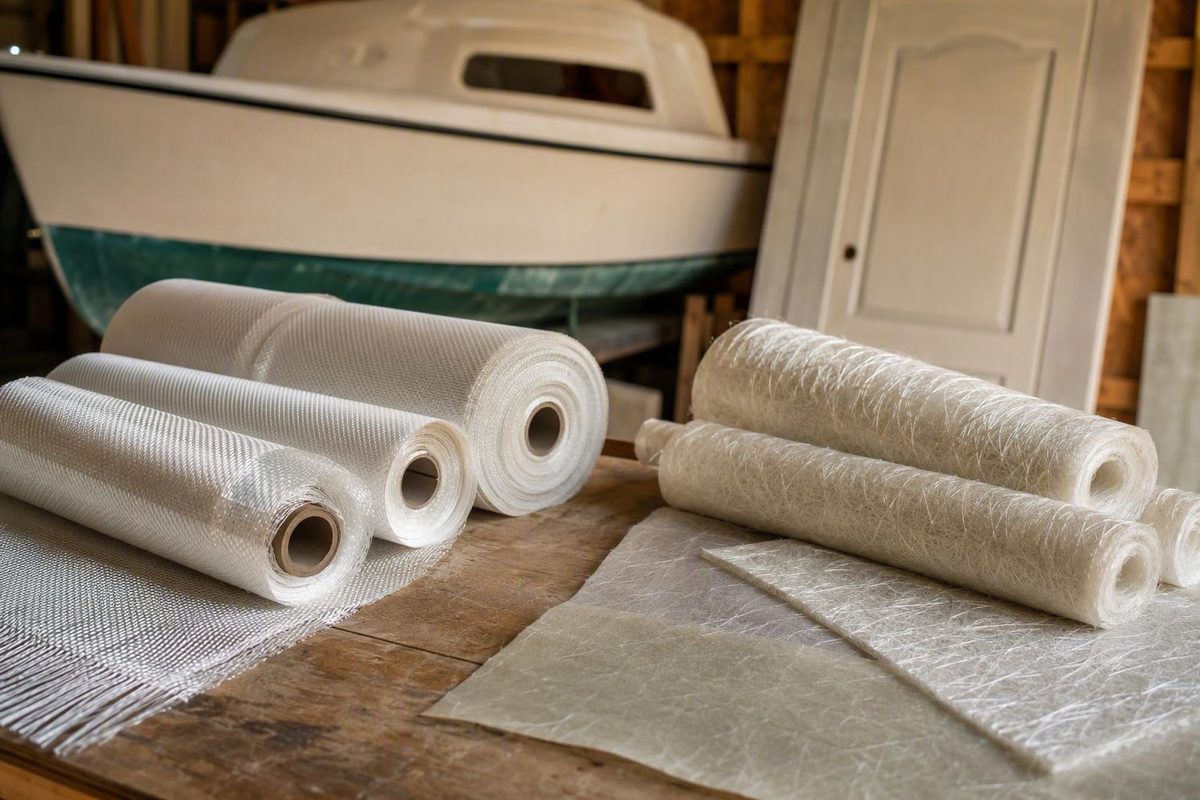
“Fiberglass rolls” describes two different product families:
- Composite reinforcement used with resin for repairs, laminating, molding, and fabrication.
- Fiberglass building insulation installed in framed wall, floor, or ceiling cavities.
Those products cannot be compared using the same specifications. Reinforcement is commonly evaluated by construction, fabric weight, weave, glass type, width, length, and resin compatibility. Insulation is selected by R-value, thickness, facing, cavity fit, package coverage, and assembly requirements.
Within composite reinforcement, there is no universally best roll. Woven cloth, chopped-strand mat, needle-punched mat, woven roving, directional fabrics, and process-specific repair products behave differently. The right purchase depends on the structure, geometry, finish, resin system, dimensions, technical documentation, and seller terms—not simply the lowest price or a familiar fabric weight.
Editorial approach: retailer sources in this guide establish catalog specifications and purchasing terms, not independent engineering performance. Structural and safety-critical decisions require product-level documentation or qualified guidance.
First, Identify Which Kind of Fiberglass Roll You Need
If the fiberglass will be saturated with resin to make a patch, laminate, mold, shell, panel, or fabricated component, you are shopping for composite reinforcement. Common forms include:
- Woven fiberglass cloth
- Chopped-strand mat
- Needle-punched fiberglass mat
- Woven roving
- Unidirectional or multiaxial fabric
- Specialized reinforcement designed for a named repair process
If the material will fill framed cavities in a building, you probably need fiberglass insulation. Insulation rolls are selected primarily by:
- Required R-value
- Material thickness
- Roll width and length
- Package coverage
- Faced or unfaced construction
- Framing spacing and cavity depth
- Intended wall, floor, ceiling, or basement assembly
The units are not interchangeable. Cloth weight in ounces per square yard is not an insulation R-value. Insulation thickness does not describe composite strength. Likewise, a temperature or performance filter in a broad industrial catalog does not establish resin compatibility or building-code compliance.
Retail pages can blur the distinction by grouping insulation, composite cloth, coated industrial fabric, and mat under similar search terms. One insulation collection, for example, organizes products by R-value, dimensions, facing, and package format while also including general explanatory material about composite reinforcement (Insulation4US fiberglass-roll collection, checked August 22, 2026).
Use this routing question:
Will the fiberglass be saturated with resin, or installed in a building cavity as thermal insulation?
If it will be saturated with epoxy, polyester, vinyl ester, silicate resin, or another matrix, continue through the reinforcement sections. If it belongs in a framed wall, floor, or ceiling, skip to the insulation section.
Woven Cloth, Chopped-Strand Mat, and Specialty Rolls Compared
The word fiberglass identifies the broad material, not the way its fibers are arranged. Construction affects handling, orientation, contouring, laminate planning, and resin compatibility.
Woven cloth consists of organized yarns running in warp and fill directions. Chopped-strand mat consists of short, randomly oriented fibers held in sheet form, commonly with a binder. Woven roving and directional fabrics are separate reinforcement categories.
| Construction | Primary selection advantage | Limitations | Resin-compatibility concern | Documented or commonly listed applications |
|---|---|---|---|---|
| Woven cloth | Controlled fiber orientation; commonly considered when low weight and a controlled finish matter | Weave and orientation must suit the part and laminate design | Confirm the sizing or finish against the exact resin | Boat repair, molds, shells, composite parts, and laminating |
| Chopped-strand mat | Useful for thickness buildup and tight or irregular contours | Suitability varies by product; loose fibers and binder affect handling | Some binders rely on styrene and may not be suitable for epoxy | Mold construction, buildup, decks, and hole repairs |
| Needle-punched mat | Mechanically entangled construction distinct from ordinary binder-backed mat | May be intended for thermal, acoustic, or industrial service rather than resin laminating | Do not infer resin compatibility from the word “mat” | Product-specific thermal, acoustic, or industrial applications |
| Woven roving | A separate, heavier woven reinforcement category | Coarser construction requires deliberate finish and contour planning | Confirm sizing, resin, and laminate schedule | Heavier laminate buildup where specified |
| Unidirectional or multiaxial fabric | Makes principal fiber directions identifiable | Must be oriented according to the design | Sizing, stitching, or binder must suit the resin | Directionally planned reinforcement |
| Specialty repair roll | Designed around a defined resin, geometry, or installation workflow | Often unsuitable as a general-purpose substitute | Follow the named system documentation | Sectional pipe patches and other process-specific repairs |
Fiberglass Warehouse presents woven cloth as the typical option when a strong, lightweight laminate and controlled construction are priorities. The same retailer describes chopped-strand mat as useful for rapid thickness buildup and tighter contours. These are commercial selection guidelines rather than independent comparative tests (Fiberglass Warehouse cloth-versus-mat guide).
Its role depends on the exact product and laminate design. One documented 2-ounce, 50-inch-wide mat is marketed for reinforcement, decks, and hole repair, but its seller says it is generally not for structural repairs (Fiberglass Supply Depot 2-ounce mat listing, checked August 22, 2026).
Cloth and compatible mat can be combined in one laminate, with each serving a different purpose. That does not establish a safe layer schedule. Loads, original construction, fiber direction, bond area, resin, processing, and cure conditions must still be addressed.
Do not collapse every felt-like product into a single “mat” category. Binder-backed chopped-strand mat and needle-punched mat can differ in fiber arrangement, sheet formation, intended use, and compatibility. A similar appearance in listing photos is not proof that two products are interchangeable.
Specialty products require the same caution. One contractor roll measures 48 inches by 130 feet and is intended for silicate resin and frequent sectional pipe-patch lining. The listing does not provide ordinary cloth specifications such as fabric weight or weave, so it should not automatically replace conventional woven reinforcement (Trenchless Supply bulk fiberglass roll, checked August 22, 2026).
How to Read Weight, Weave, Width, Thickness, and Glass Specifications
A fiberglass listing is useful only when you can interpret its units and recognize what it leaves out.
Fabric weight
Fiberglass cloth weight is commonly expressed in ounces per square yard, often shortened to “oz.” In that convention, “6 oz cloth” means one square yard of dry fabric weighs approximately six ounces. It does not mean the entire roll weighs six ounces. Because titles are sometimes abbreviated, verify the unit on the exact listing (Jamestown Distributors fiberglass-cloth guide).
Retail listings illustrate market variety rather than a universal stock standard. One collection lists cloth from 0.75 ounce through 10 ounces, with product-dependent widths of 38, 40, 50, and 60 inches. The same collection includes plain and satin constructions (Fiberglass Warehouse cloth collection, checked August 22, 2026). Another catalog includes plain, twill, unidirectional, and triaxial options, with listed widths from 30 to 60 inches and selectable lengths ranging from short cuts to large rolls.
Retailer guidance generally associates lighter cloth with smoother or more transparent finishes and heavier cloth with faster thickness buildup. Treat that as preliminary shopping guidance, not a universal strength ranking.
Weave and orientation
Plain weave alternates warp and fill yarns over and under one another. Retailer guidance describes it as comparatively easy to handle and less inclined to unravel than satin constructions when cut.
Satin weave uses longer yarn floats. Sellers describe it as more pliable over curves but potentially harder to position and handle. The available evidence does not independently establish that one weave is categorically stronger than another.
Other cataloged constructions include:
- Twill, commonly identified by a diagonal pattern
- Unidirectional fabric, with most reinforcement aligned in one principal direction
- Triaxial or other multiaxial fabric, with reinforcement arranged in multiple defined directions
- Woven roving, a coarser and heavier woven category
An orientation label tells you how the fibers are arranged. It does not determine where those fibers should be placed on a loaded or safety-critical part. That requires design information.
Width and length
Composite reinforcement listings include narrow tapes as well as rolls roughly 30 to 60 inches wide. Length may be sold as:
- A one-yard cut
- Multiple contiguous yards
- A selectable fixed length
- An approximate full roll
- A fixed contractor roll
Width affects cutting layout and seam count. A wider roll can cover a broad panel with fewer seams, while a narrower roll may produce less offcut waste on small parts. Draw the individual plies across the actual roll width before ordering rather than comparing area alone.
Thickness
Do not convert a retailer’s dry-cloth thickness into a structural laminate schedule unless documentation for the exact product and process validates that relationship.
Glass type, sizing, finish, and edges
A useful specification should identify more than weight and width:
- Glass type, such as E-glass
- Sizing or finish
- Binder for mat products
- Edge treatment
- Weave or fiber orientation
- Technical data sheet
- Approved resin systems
- Storage and processing requirements
AeroMarine, for example, identifies its 6-ounce, 50-inch plain-weave cloth as E-glass and provides a technical data sheet. Many category pages omit comparable product-level detail.
Treat broad catalog filters cautiously. McMaster-Carr’s fiberglass-roll-related category includes widths up to 60 inches and fabric-weight filters from 2 to 64 oz/yd², but it also contains coated and non-fiberglass materials. Filter values show catalog possibilities; they do not prove that every selected attribute occurs in one product (McMaster-Carr fiberglass-roll category, checked August 22, 2026).
Match the Roll to the Application and Finish
Start with the finished part and work backward. Identify the reinforcement’s intended role, the geometry it must follow, the surface appearance required, and the resin system that will be used.
| Application | Candidate characteristics | Main checks before purchase |
|---|---|---|
| General marine laminating or non-engineered repair | Commonly listed 6-ounce plain-weave E-glass around 50 inches wide | Original laminate, repair scope, resin compatibility, finish, and technical data |
| Flat composite panel | Width suited to the panel; weave and orientation matched to the design | Seam layout, fiber direction, surface finish, and consolidation method |
| Mold fabrication | Cloth, compatible mat, or a designed combination | Resin system, corners, surface transition, release system, and buildup schedule |
| Curved or irregular part | A construction documented as suitable for the required contours | Trial fit, wrinkles, radius, binder, and resin |
| Transparent or cosmetic laminate | Lighter or open-weave cloth with a compatible, clean finish | Scrap test, wet-out appearance, substrate, resin, and lighting |
| Waterproofing or surface layer | Lightweight cloth documented for the substrate and resin | Adhesion, movement, finish coats, and the layer’s intended role |
| Sectional pipe patch | Process-specific contractor reinforcement | Named patch system, required resin, fixed dimensions, and return terms |
For general marine laminating, 6-ounce plain-weave E-glass around 50 inches wide is a commonly listed starting format, not a universal prescription. AeroMarine lists one such cloth in contiguous one-yard increments for laminating and fiberglass repairs (AeroMarine fiberglass-cloth listing, checked August 22, 2026). Its availability demonstrates a common retail format; it does not establish that the material will restore every hull, deck, or shell.
For a transparent layup, seller and practitioner guidance favors lighter or more open-weave cloth. Because that observation is not a controlled comparison, test the actual cloth, substrate, resin, finish, and lighting on scrap before buying a large quantity. The supplied practitioner evidence also warns that damaged sizing or water contact can leave cloth looking white after wet-out.
For mold work, corners, or rapid thickness buildup, chopped-strand mat may be practical only after its binder and resin compatibility have been confirmed. Do not select it solely because a listing calls it “fiberglass mat.”
For structural repair, generic instructions such as “use three layers of 6-ounce cloth” are inadequate. Obtain the original laminate information, an established repair specification, the reinforcement and resin technical data sheets, or qualified engineering guidance. This is especially important around attachments, penetrations, cores, highly loaded hull regions, and safety-critical industrial components.
The documented 48-inch-by-130-foot pipe-repair roll may fit a contractor’s repeatable sectional patch process because it is intended for silicate resin and custom-cut patch lengths. It is not automatically a substitute for epoxy-compatible boatbuilding cloth—and conventional cloth is not automatically a substitute for it.
Roll width creates a practical tradeoff:
- Wider roll: fewer seams across broad areas
- Narrower roll: simpler cutting and less potential waste on narrow parts
- Very wide roll on an irregular part: more material to position at once
- Narrow strips on a broad panel: more overlaps and local thickness transitions
Sketch the cutting layout before ordering. A low nominal area price is not economical if the roll width produces unusable offcuts.
Confirm Resin Compatibility Before You Buy
Compatibility belongs to the exact reinforcement product, not to the broad word “fiberglass.”
A woven cloth may carry a sizing intended for particular resin families. Chopped-strand mat may contain a binder that must soften or dissolve during lamination. A specialty reinforcement may be designed around one industrial resin and installation process.
Fiberglass Warehouse states that the woven fabrics in its listed range are compatible with epoxy, polyester, and vinyl ester resin. That statement applies to the seller’s specified products; it does not prove that every fiberglass cloth from every supplier works equally well with those three systems.
Binder-backed chopped-strand mat requires particular care. Fiberglass Warehouse says its mat works with polyester and vinyl ester because styrene dissolves the binder. The retailer also says epoxy-compatible chopped-strand mats exist, which means buyers must identify the particular binder and product instead of assuming either that every mat works with epoxy or that none does.
Sizing and condition can also affect wet-out and cosmetic appearance. The evidence supports checking for product-specific sizing and avoiding water damage when appearance matters. Broader bonding or storage claims should come from the technical documentation for the selected product.
Before buying, verify:
- [ ] Reinforcement construction: cloth, chopped-strand mat, needle mat, roving, or multiaxial
- [ ] Glass type
- [ ] Fabric sizing, finish, or mat binder
- [ ] Approved resin system
- [ ] Technical data sheet for the exact product
- [ ] Processing and cure conditions
- [ ] Intended application
- [ ] Packaging condition when relevant
- [ ] Whether the reinforcement is one part of a named repair system
If a seller says only “works with resin,” ask which resin. If a mat listing omits the binder, do not infer epoxy compatibility. If a specialty roll specifies silicate resin, do not substitute another system without supporting documentation.
The epoxy wet-out discussion below applies only to fiberglass cloth used with epoxy. It does not automatically transfer to polyester, vinyl ester, or silicate systems.
Calculate Roll Area, Yardage, Seams, and Comparable Cost
Roll prices become meaningful only after the included quantity is confirmed.
Roll-area formula
Convert width and length to feet, then calculate:
Roll area (sq ft) = width (ft) × length (ft)
Roll area (sq yd) = roll area (sq ft) ÷ 9
For a 50-inch-wide roll:
Width in feet = 50 ÷ 12 = 4.167 ft
If the listing sells one linear yard, or 3 feet:
Area = 4.167 × 3 = 12.5 sq ft
Area = 12.5 ÷ 9 = 1.389 sq yd
A “yard” of 50-inch-wide fabric is therefore a linear yard, not one square yard. The 50-inch width and contiguous one-yard sales format are documented by AeroMarine.
Planning total reinforcement
Start with:
Base reinforcement area =
project surface area × layer count
Then calculate separate allowances for:
- Overlaps
- Edge trimming
- Damaged or unusable sections
- Fiber-orientation cuts
- Curves and compound shapes
- Test pieces
- Offcuts that cannot be reused
Do not apply a universal waste percentage. A rectangular panel that nests cleanly across the roll can produce much less waste than tapered or directional plies. Draw each layer to scale across the actual width.
Convert area to linear yards
For fabric sold at a fixed width:
Required linear feet =
required square feet ÷ roll width in feet

Required linear yards =
required linear feet ÷ 3
Suppose the planned plies, overlaps, and cutting allowances total 150 square feet. With 50-inch-wide cloth:
150 ÷ 4.167 = approximately 36 linear feet
36 ÷ 3 = approximately 12 linear yards
Round according to the seller’s ordering increment, continuity limit, and required test pieces.
Normalize cost
After confirming the sales unit:
Cost per sq ft =
confirmed price ÷ included sq ft

Cost per sq yd =
confirmed price ÷ included sq yd
Do not normalize a displayed price until you know whether it buys one yard, a selected cut, a full roll, or a package.
Three documented reinforcement formats illustrate the problem:
| Sales format | Sourced dimensions | Calculated nominal area |
|---|---|---|
| Contiguous yardage | 50 in × 1 linear yd | 12.5 sq ft |
| Approximate full mat roll | 50 in × approximately 55 yd | approximately 687.5 sq ft |
| Fixed specialty roll | 48 in × 130 ft | 520 sq ft |
The approximately 55-yard mat dimension comes from the Fiberglass Supply Depot listing, while the fixed 48-inch-by-130-foot dimensions come from the Trenchless Supply listing. The first area remains approximate because its listed length is approximate. The specialty roll also uses a different resin and workflow, so equal cost per square foot would not make the products interchangeable.
Insulation introduces another unit: the package, which may contain multiple rolls and be priced by total coverage. Comparing an insulation package with one linear yard of reinforcement is meaningless even if both listings use the phrase “fiberglass roll.”
The available evidence does not support a universal formula for resin demand, cured laminate thickness, or structural layer count. Those quantities depend on the exact reinforcement, resin, process, consolidation, and design.
Buying by the Yard Versus Ordering a Full Roll
Fiberglass products are sold in several formats:
- Running yard: each quantity unit adds one linear yard at the stated width
- Contiguous yardage: multiple yards are supplied as one continuous cut, subject to stock and roll limits
- Selectable length: the buyer chooses among specified cuts or roll sizes
- Approximate full roll: total length is nominal rather than guaranteed
- Fixed specialty roll: one nonconfigurable width and length
- Insulation package: one or more rolls sold together by coverage
Running-yard purchasing suits samples and small repairs. A full roll can reduce ordering interruptions, but it creates storage, shipping, handling, and return considerations.
Before ordering, confirm:
- [ ] Exact width
- [ ] Exact, minimum, or approximate length
- [ ] Whether “oz” means ounces per square yard
- [ ] Weave or fiber construction
- [ ] Glass type
- [ ] Sizing, finish, or binder
- [ ] Approved resin system
- [ ] Technical data sheet and matching product code
- [ ] Price unit: yard, cut, roll, or package
- [ ] Maximum continuous-cut length
- [ ] Current stock or backorder status
- [ ] Parcel, oversized, or freight cost
- [ ] Packaging and damage-claim procedure
- [ ] Returnability of cut material
- [ ] Restocking fee and responsibility for return freight
AeroMarine illustrates contiguous ordering: buyers select a quantity of one-yard increments and receive 50-inch-wide continuous cloth. The page displayed $9 when checked August 22, 2026, but the captured wording did not explicitly establish that the amount was a per-yard price. The same page limited returns to unopened, unused products within 30 days, required customer-paid return shipping, and listed a 15% restocking fee. These are mutable seller terms that should be reconfirmed before purchase.
The Fiberglass Supply Depot listing illustrates a different ambiguity. When checked August 22, 2026, it described a 50-inch-wide full roll as approximately 55 yards, listed an 88-pound roll weight, displayed $199.99 for the selected roll option, and also used “sold by the running yard” language. It stated that cut lengths were non-returnable. Buyers should reconcile the selected option, invoice unit, shipping class, and return status directly with the seller.
The sectional pipe-repair product is simpler dimensionally—48 inches by 130 feet—but commercially restrictive. Its listing marked the roll non-returnable when checked August 22, 2026. A fixed specialty roll can be efficient when it matches the named process and an expensive mistake when it does not.
Record the date whenever you note a price, stock statement, shipping term, or return policy. Listings change, approximate lengths are not guarantees, and displayed starting prices may correspond to the smallest option rather than the quantity you need.
Basic Epoxy Wet-Out and Common Visual Problems
This section is limited to visual wet-out concepts for fiberglass cloth used with epoxy, principally following WEST SYSTEM’s published application method. It is not a complete resin-use or workplace-safety procedure.
It does not establish the PPE, ventilation, skin and eye protection, dust controls, fire precautions, spill response, first aid, or disposal requirements for your product and workspace. Before opening or mixing resin, obtain and follow the selected manufacturer’s current label, safety data sheet, mixing instructions, temperature limits, cure schedule, and disposal directions. If those documents are unavailable or the work cannot be performed under their specified conditions, do not rely on this overview to proceed.
Dry method versus wet method
In the dry method, cloth is positioned over the prepared dry surface and epoxy is then applied through it. In the wet method, cloth is placed over an epoxy-coated surface.
WEST SYSTEM describes the dry method as easier, particularly with thin cloth, because the fabric can be positioned before becoming resin-laden. Its wet method can help cloth cling in certain circumstances, but it can make positioning and wrinkle removal more difficult, particularly with larger pieces (WEST SYSTEM fiberglass-cloth application guide).
What correct wet-out looks like
Under the WEST SYSTEM method, properly wet-out cloth appears evenly transparent, while white areas indicate dry fabric. A porous substrate may absorb epoxy beneath the cloth, so the manufacturer directs users to account for both the fabric and the surface.
Shiny pools indicate excess epoxy rather than improved saturation. The same instructions warn that excess can allow cloth to float, while excessive removal can leave dry areas. The visual target is an even, transparent surface with the cloth texture still visible.
Overworking wet epoxy can suspend small air bubbles, which are especially visible under a clear finish. Work methodically and stop repeatedly manipulating areas that already appear evenly wet out.
Seams and weave filling
Where separate pieces meet, WEST SYSTEM recommends approximately two inches of overlap. It says a lap joint is stronger than a butt joint but notes that an overlap creates doubled local thickness. The ridge can affect appearance and later layers.
Under its epoxy system, WEST SYSTEM says filling the weave before final sanding generally takes two or three coats. Follow the full manufacturer procedure for application timing, recoating, cure, trimming, and sanding rather than treating those coat counts as universal.
Tool preferences such as rollers, brushes, and spreaders remain product- and situation-dependent. Personal temperature or tool anecdotes do not override the selected epoxy manufacturer’s instructions.
If You Actually Need Fiberglass Insulation Rolls
Building-insulation rolls are not laminating reinforcement. Do not select them by cloth weight, weave, or epoxy compatibility.
Choose insulation using:
- Required R-value
- Cavity depth
- Framing spacing
- Insulation width
- Roll length
- Package coverage
- Faced or unfaced construction
- Intended wall, floor, ceiling, or basement assembly
- Product-level fire and moisture documentation
- Applicable local requirements
Faced insulation has an attached facing, commonly kraft paper or foil depending on the product. Unfaced insulation does not have an attached vapor retarder. A facing should not automatically be described as a code-compliant vapor barrier.
Widths such as 15 inches and 23 inches appear in insulation listings because products are sold for different framing arrangements. Neither width is correct for every building cavity.
The cited retailer collection includes R-11, R-13, R-19, R-20, and R-30 products in faced and unfaced formats, including packages containing multiple rolls. Those collection labels can narrow a search, but product-level documents are still needed for thermal performance, package coverage, facing, fire characteristics, moisture control, acoustic properties, and compliance (Insulation4US fiberglass-roll collection, checked August 22, 2026).
Watch for conflicting retailer labels. In that collection, some Silvercote wording conflicts over PSK versus FSK and perforated versus non-perforated descriptions. When the title, image, URL, and option selector disagree, confirm the exact model against current manufacturer documentation before ordering.
Frequently Asked Questions
Is fiberglass cloth the same as chopped-strand mat?
No. Fiberglass cloth uses yarns arranged in a woven pattern, usually with identifiable warp and fill directions. Chopped-strand mat uses shorter, randomly oriented fibers held in sheet form, commonly with a binder.
They handle differently and can serve different laminate roles. Cloth is commonly considered when controlled fiber direction and relatively low reinforcement weight matter. Mat may be useful for contouring or thickness buildup if its binder is compatible with the resin. Needle-punched mat is another construction and should not be assumed equivalent to binder-backed chopped-strand mat.
What does 6 oz fiberglass cloth mean?
It commonly means the dry cloth weighs 6 ounces per square yard. It does not mean the roll weighs six ounces, and it does not specify roll width, length, glass type, weave, sizing, or cured laminate thickness.
Confirm the unit and read the complete specification. Two 6-ounce fabrics can differ in width, weave, glass type, finish, edge treatment, and resin compatibility.
Can every fiberglass roll be used with epoxy resin?
No. Some woven cloth is explicitly documented as epoxy-compatible, but compatibility must be confirmed for the exact product. Sizing can affect wet-out, while some chopped-strand mats use binders intended for styrene-containing polyester or vinyl ester systems.
Epoxy-compatible mats exist. The useful question is not simply “Is this fiberglass?” but “Does the technical data sheet approve this reinforcement, sizing, or binder for my resin and application?”
How do I calculate the area of a fiberglass roll?
Convert width and length to the same units, then multiply:
Area in square feet = width in feet × length in feet
Area in square yards = square feet ÷ 9
For material sold by the linear yard, multiply its width in feet by 3 feet. A 50-inch-wide linear yard covers:
(50 ÷ 12) × 3 = 12.5 sq ft
Use project area multiplied by layer count as the starting requirement. Then add allowances calculated from the actual overlap, trimming, test pieces, defects, and cutting layout.
How can I tell whether fiberglass cloth is fully wet out?
With epoxy, the WEST SYSTEM guidance used here says properly wet-out cloth should appear evenly transparent. White areas indicate dry fibers, while shiny pools indicate excess epoxy rather than better saturation.
Check porous substrates because they may absorb epoxy beneath the cloth. Avoid excessive working of clear layups, and follow the selected epoxy manufacturer’s complete instructions for mixing, application, recoating, cure, sanding, and safety.
The practical buying sequence is:
- Decide whether you need composite reinforcement or building insulation.
- For reinforcement, choose the correct construction: woven cloth, chopped-strand mat, needle mat, woven roving, directional fabric, or a specialty system.
- Match weight, weave, orientation, and width to the geometry and desired finish.
- Verify the exact resin compatibility, sizing or binder, and technical data sheet.
- Calculate total ply area, cutting layout, seams, overlaps, and unavoidable waste.
- Confirm whether the price is per yard, cut, roll, or package, then verify freight and return terms.
For structural repairs, stop short of selecting a generic fabric weight or layer count from a shopping guide. Use original laminate information, product-level technical data, an established repair specification, or qualified engineering guidance.