
How to Clean Rusty Painted Metal Without Stripping Sound Paint
Separate rust stains from failing paint, clean sound finishes gently, and know when rusty painted metal needs a spot repair instead of more scrubbing.
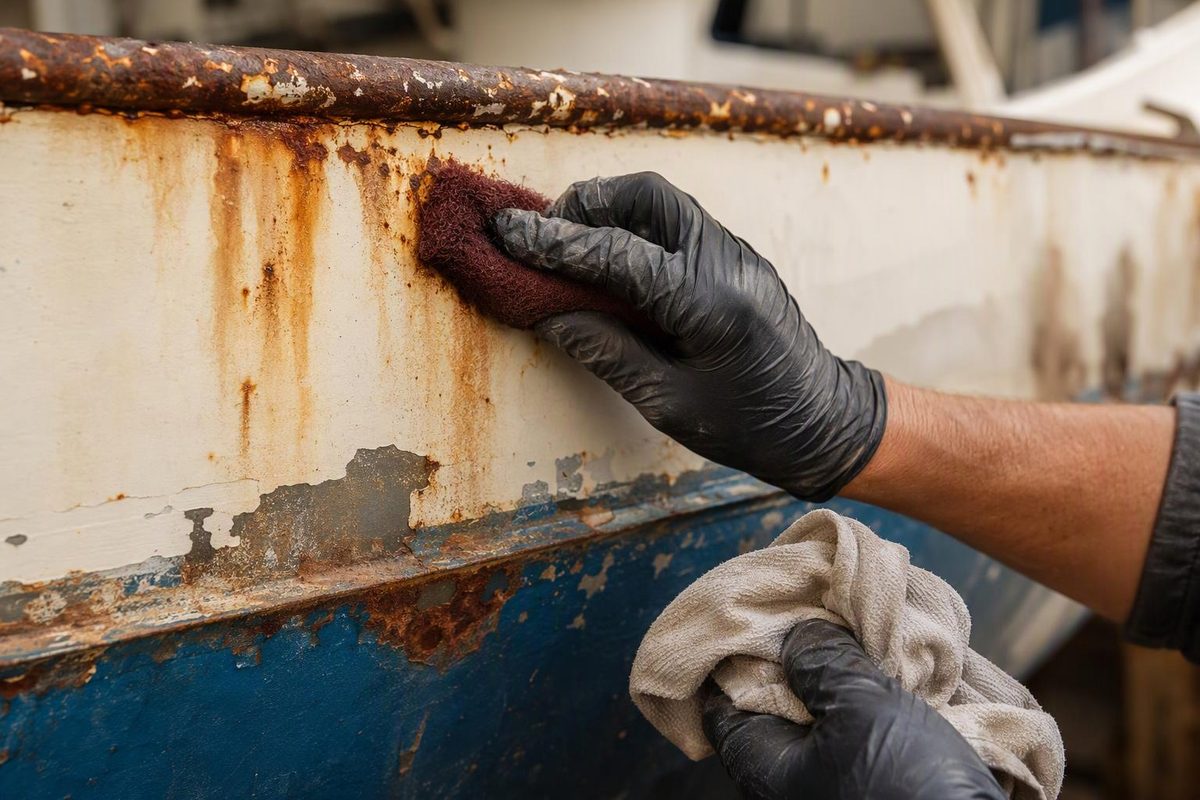
Start with a gentle wash, then decide whether the orange mark is a stain on intact paint or rust breaking through it. A surface stain may come off without removing the finish. Rust beneath blistered or peeling paint is a repair job; cleaning alone will not restore the coating.
This distinction matters on painted steel doors and on metal fittings beside a fiberglass boat or RV panel: treat the damaged material, not just the visible orange streak.
1. Wash first and inspect the paint
Check the item’s care instructions before choosing a cleaner. For sound paint, start with diluted mild dishwashing detergent and water, applied with a soft cloth or sponge. Rinse with clean water and dry. This follows the gentle approach in Clopay’s metal garage-door cleaning guidance, which also excludes scouring powders and solvents.
Once the dirt is gone, inspect the mark:
- Smooth paint with an orange streak or deposit: Try the stain-removal route below. Look above the streak for a rusty screw, bracket or other source.
- Exposed rusty metal at a scratch or chip: The area needs localized rust removal and coating repair.
- Bubbles, lifting edges or flakes around rust: Stop trying to preserve that patch of paint. The failed coating must be removed to expose the damage.
- Holes, substantial metal loss or a weakened fitting: Stop cosmetic treatment and have the part assessed, especially if it carries a load or secures boat hardware.
Do not begin with sandpaper or a wire brush if your goal is to save intact paint. Reserve abrasive preparation for areas that actually require repair.
2. Remove stains from intact paint
Choose a rust-stain remover that explicitly lists painted surfaces, not simply one labeled “for metal.” Check compatibility with nearby fiberglass, sealants, trim and hardware too.
For example, Star brite Rust Stain Remover lists both painted surfaces and fiberglass. Its directions specify applying directly to the stain, waiting 1–2 minutes, then rinsing with fresh water. Deep stains may need a second application and light scrubbing. That timing belongs to this product; do not transfer it to another cleaner.
Use this sequence:
- Test a small hidden patch. Rinse and let it dry before judging color and gloss.
- Treat only the stained area. Follow the cleaner’s label for application, contact time, ventilation and protective equipment.
- Rinse thoroughly and dry. Stop if the paint softens, lifts or changes appearance.
- Reinspect. If the stain fades and the paint remains sound, avoid escalating to abrasives. If damaged paint or exposed rust becomes visible, switch to spot repair.
A cleaner’s suitability for fiberglass does not establish suitability for paint. CLR Calcium, Lime & Rust Remover, for instance, lists fiberglass among its suitable surfaces but expressly prohibits use on painted, coated or sealed surfaces. Do not use it on painted metal.
Do not mix cleaning products or extend contact time to force a result.
3. When cleaning becomes a spot repair
If rust has broken through the finish, preserving all the paint is no longer a realistic goal.
Before scraping or sanding an older household door, check for lead-paint risk. For U.S. homes built before 1978, EPA recommends testing for lead-based paint and hiring a lead-safe certified contractor. If you do the work yourself, use lead-safe practices; ordinary dry sanding is not an appropriate default. If the home’s age is unknown, EPA advises assuming the area has lead-based paint and using those practices.
After washing and drying, remove loose rust, scale and deteriorated coating locally, then follow a compatible metal primer and topcoat system’s preparation instructions. Rust-Oleum’s rust-treatment guidance likewise requires contaminants to be washed away and loose rust and failed coatings removed.
Keep repair chemicals off surrounding sound paint unless their instructions permit contact. Rust-Oleum Rust Dissolver Gel, for example, requires an inconspicuous test and warns not to let it dry on painted surfaces.
A rust converter is not a paint-preserving cleaner: Rust-Oleum’s Rust Reformer creates a black, paintable film. Use such a product only as part of a planned repair, not to erase a stain from intact paint.
Finally, address the source of recurring streaks. Cleaning a painted bracket or the fiberglass beneath it does not repair the corroding fastener above it.